This is for you if…
- You're a very capable businessperson, but not a technical specialist in construction or design
- You want an independent, experienced view before signing off design to the next stage
- You suspect there is hidden cost or complexity in the design, but can't really pinpoint where exactly
- You rely on consultants who are excellent in their fields, but you're worried no one is looking holistically at the entire cradle to grave scenario, from your point of view
- You've previously thought, mid-project, why didn't we pick this up earlier?
Here’s what happens when you catch it early
EXAMPLE 1: When contingency disappears and the bank pulls the handbrake
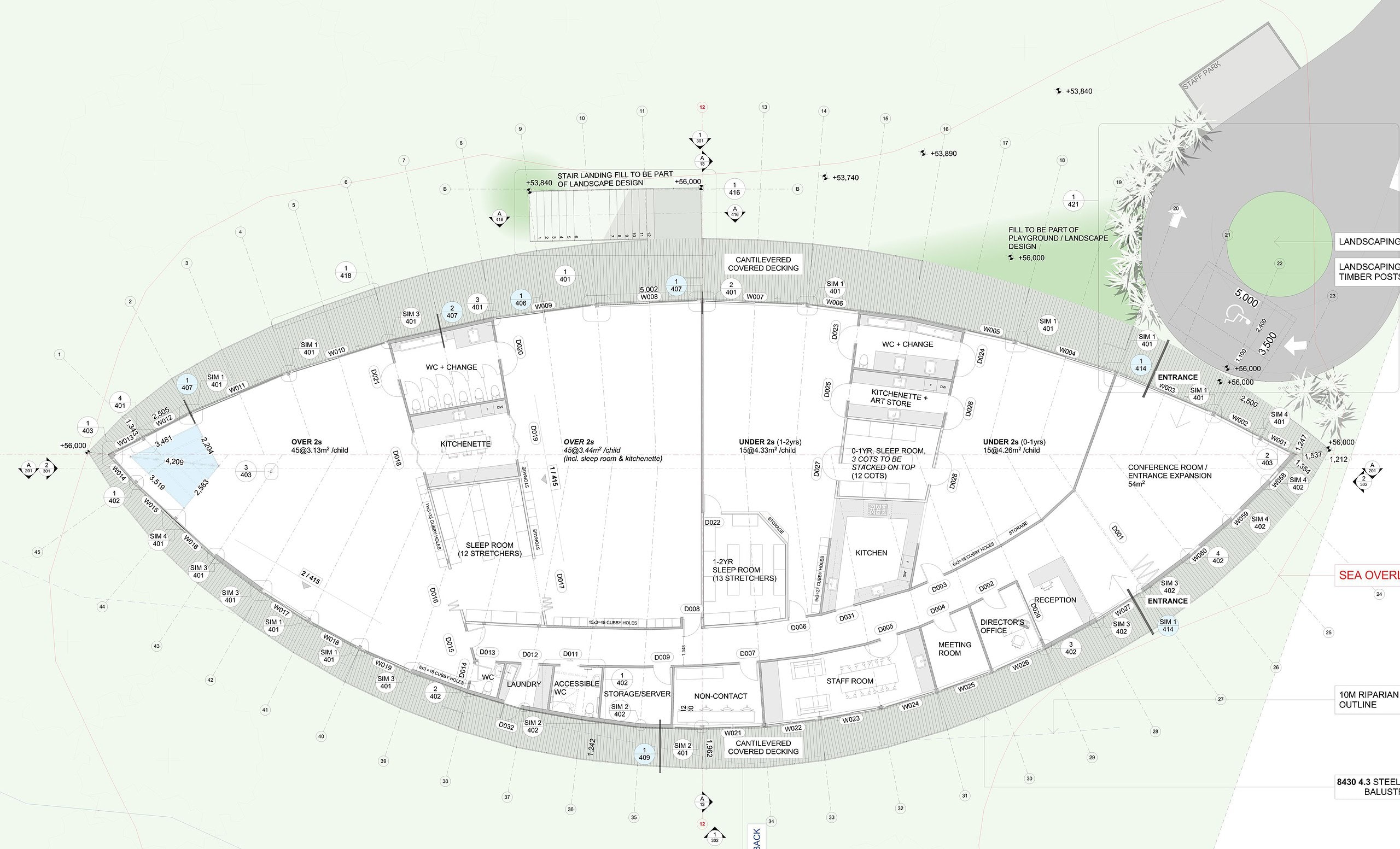
Early in construction, unforeseen ground conditions wiped out most of the project contingency. At the same time, further cost escalation was looming due to COVID related supply delays.
That combination triggered a hard stop. The bank refused to release additional funding. The project stalled. The client was under serious commercial pressure.
At that point, superficial cost-cutting wasn’t going to work. Changing carpet and tapware, or cosmetic elements wouldn’t have achieved anything meaningful.
What was required was a fundamental reset.
Optimising the structure would have the biggest impact.
We stepped back and examined the design. Walls could be better aligned. Load transfer could be better.
We got out our coloured pens…
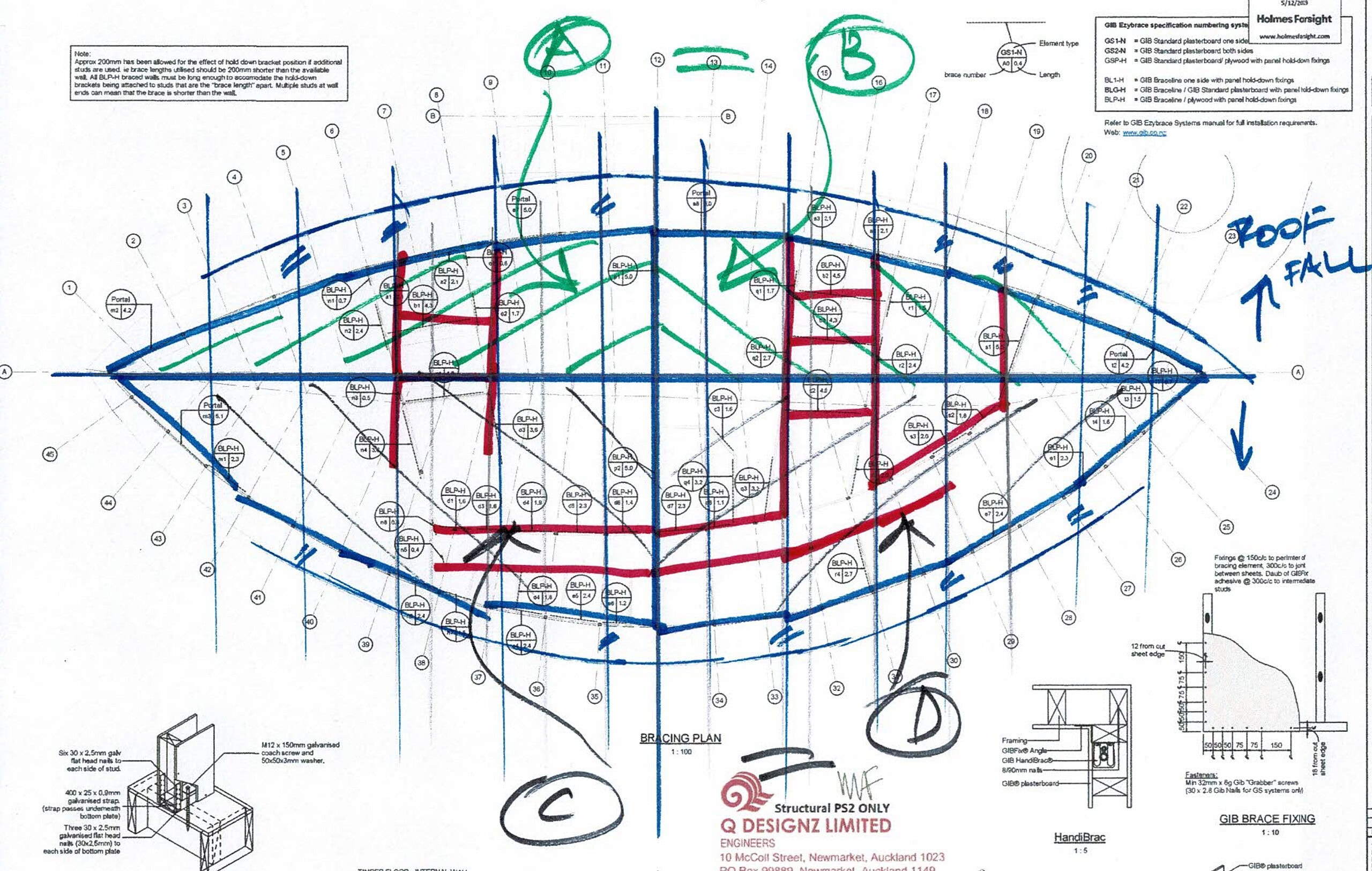
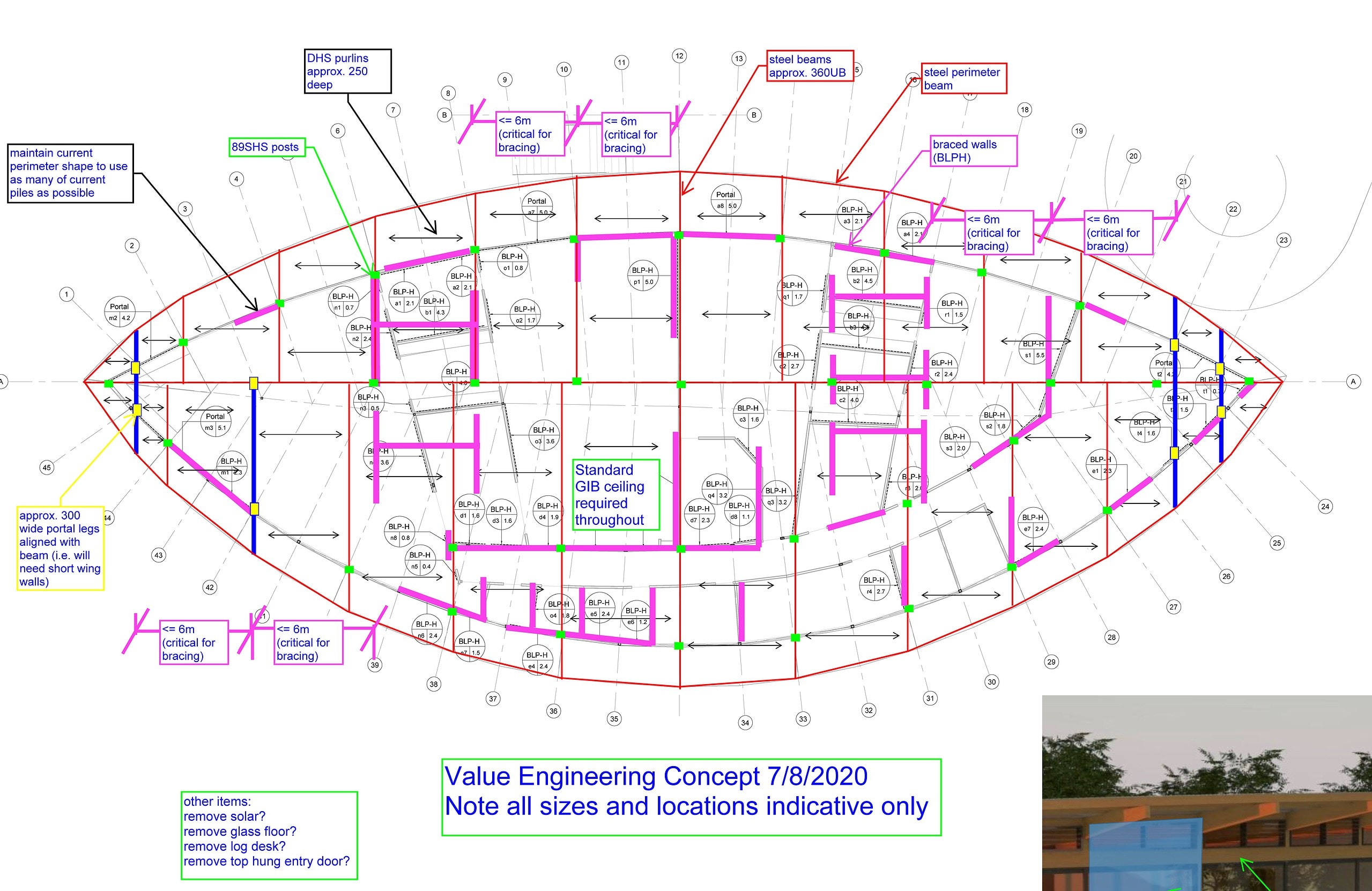
That meant:
- Simplifying the structure without compromising design intent
- Removing imported timber and substituting readily available steel
- Rationalising geometry and connections to reduce construction effort
Symmetry = savings.
The outcome was immediate and measurable:
- The bank released funding
- The project restarted
- The client regained confidence and momentum

EXAMPLE 2: Copy-paste design with $50,000 consequence
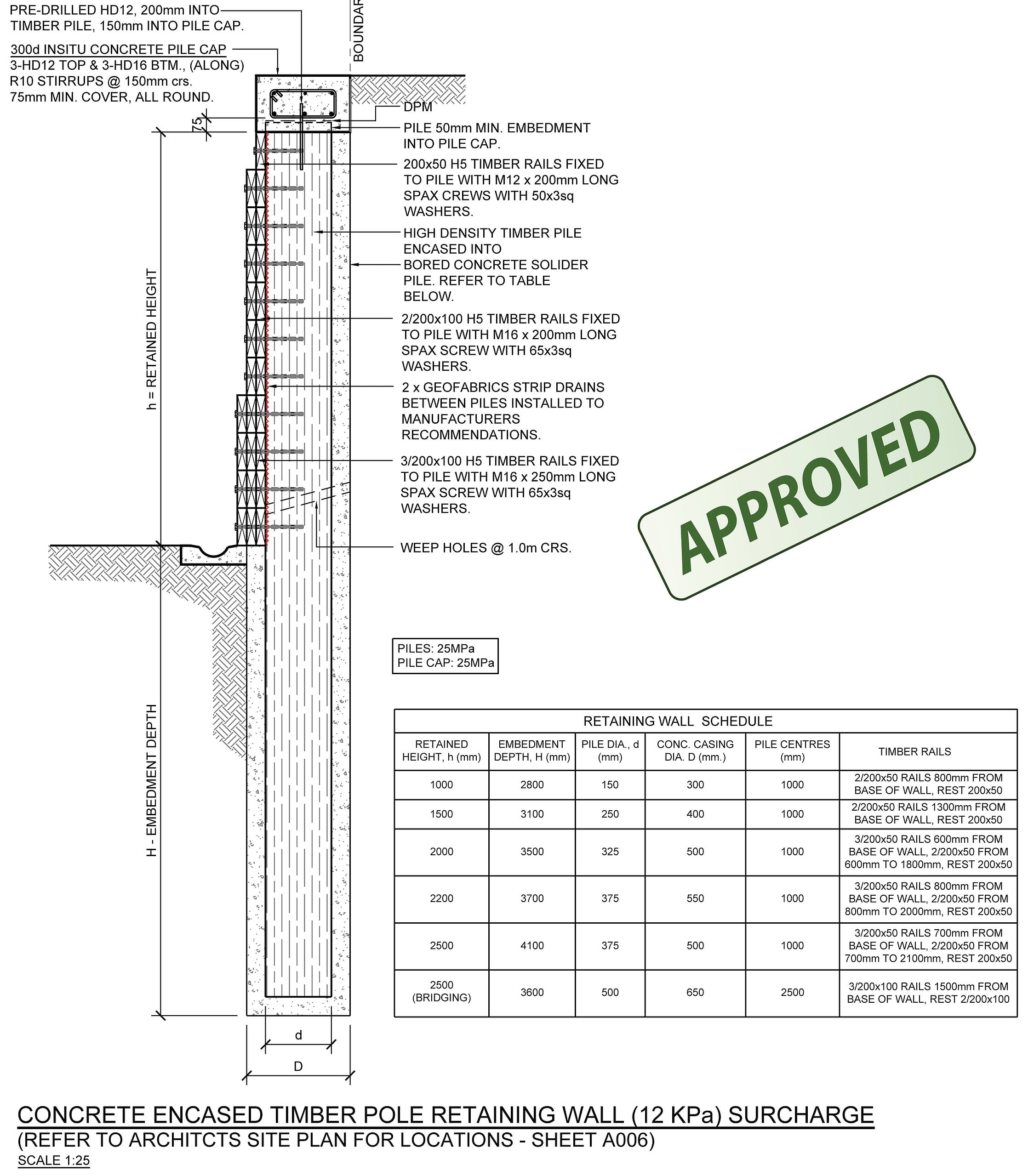
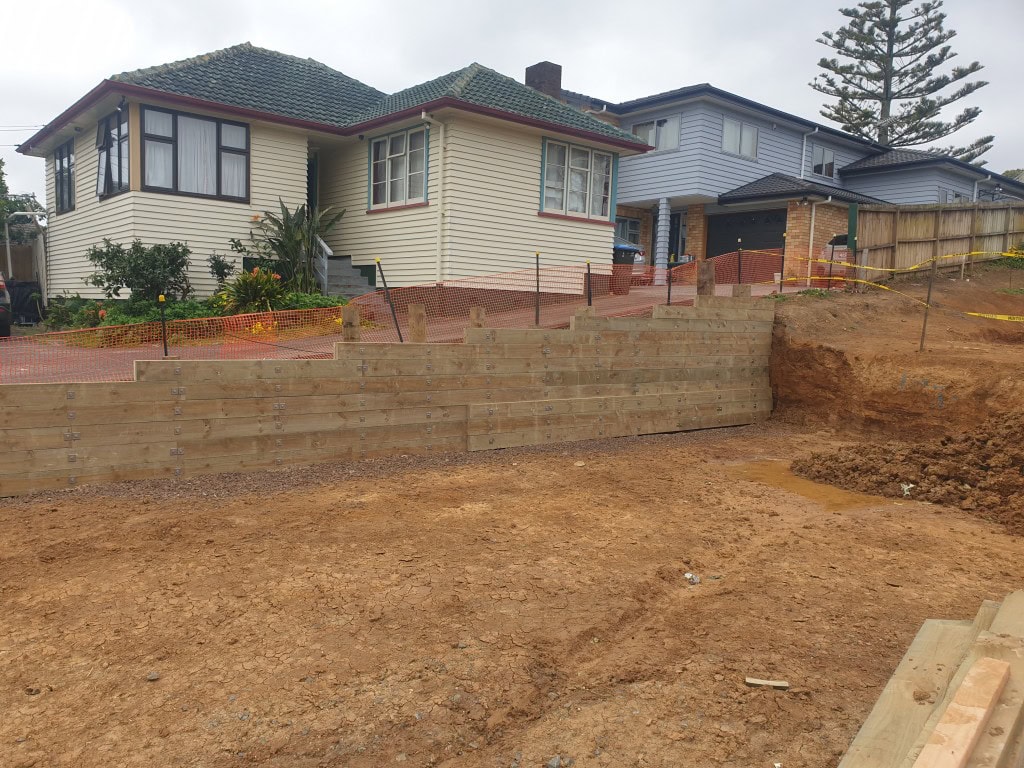
On a medium-density housing project, a retaining wall design had been copied from one boundary line to another.
On paper, it looked reasonable. In reality, it was solving a problem that didn’t exist.
Boundary 1 (original design intent)
Along the first boundary, the retaining wall had been designed to carry the load of a neighbouring property and protect underlying drainage lines.
That condition justified a heavily engineered solution:
- Deep piles
- A substantial reinforced concrete capping beam
Boundary 2 (copied application)
Along the other boundary, those conditions did not apply.
- No pipes to protect
- No heavy external loading
- No requirement for a deep piled wall or capping beam
However, the design had been (copied across) without re-testing the assumptions behind it.
Our delivery-led review questioned that carry-over and tested what the wall actually needed to do.
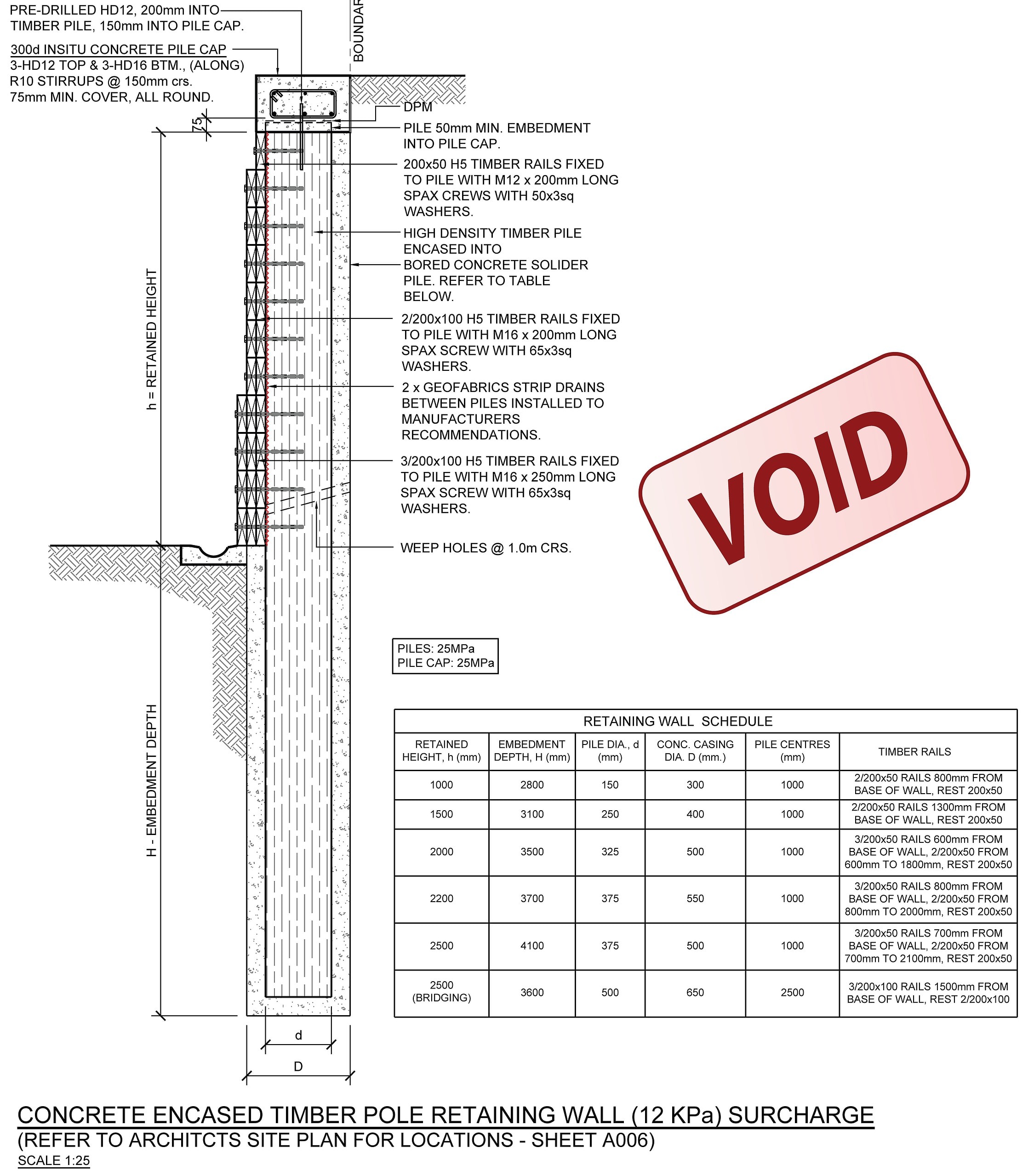
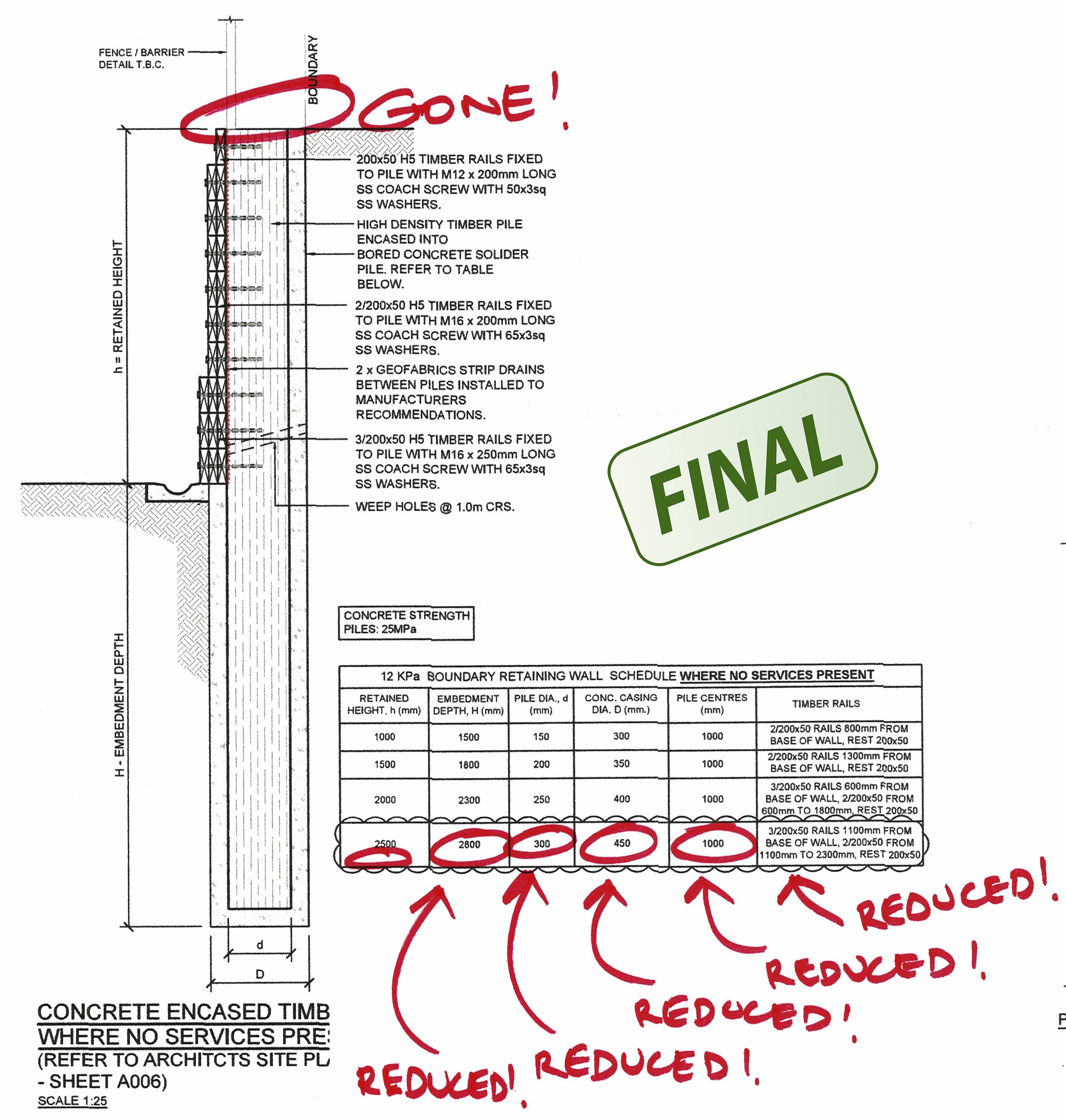
The revised solution:
- Removed the concrete capping beam entirely
- Reduced the pile depth significantly
- The issue was identified early, before construction proceeded.
- The design was revised.
- The unnecessary scope was removed.
~$50,000 of cost and time was eliminated from a single copied detail.
And it wasn't some clever redesign. It was just an undetected error.
Tenderers priced for this error. And client would've paid for this additional and unnecessary cost.
Only because it was drawn neatly and sat in the approved set, everyone just carried it forward.
This is the bit most teams miss.
What CORE Review looks like
CORE Review examines issued design documentation through a construction and delivery lens, focusing on where cost, risk, and complexity are being introduced unnecessarily.
We review:
- Structural concepts
- Architectural drawings
- Relevant consultant reports
- Specifications and schedules
The review focuses on:
- Sequencing, access, and site constraints
- Buildability and construction methodology
- Geometry, tolerances, and connection complexity
- Over-specification and inherited design assumptions
- Material selection, availability, and lead-time exposure
- Design decisions that quietly compound cost during delivery
The aim is not to redesign the project, but to surface the delivery consequences of what is already drawn
What CORE Review does not do
To keep CORE Review sharp, fast, and defensible, it does not:
- Redesign the project
- Assess planning or consenting risk
- Provide design compliance sign-off
- Set or validate overall project budgets
- Produce a full cost plan or tender pricing
- Evaluate financial feasibility or investment returns
CORE Review does not replace your consultants. It provides an independent, delivery-focused sense check before decisions are locked in.
Who you’re dealing with

CORE Review is delivered by Keola, led by Sanjesh Lal.
Sanjesh is a Chartered Professional Engineer and Licensed Building Practitioner, with over two decades of experience delivering complex projects across residential, education, community housing, and light commercial sectors.
His background spans:
- Engineering and construction delivery
- Contractor-led problem solving on live sites
- Balancing design intent with buildability, risk, and cost reality
- Navigating design complexity under real commercial pressure
Sanjesh also sits on the Building Research Advisory Committee (BRAC) at BRANZ.
The result is not opinion, and not hindsight.
It’s simple grounded judgement based on how projects are actually built.
When CORE Review is not suitable
CORE Review may not be suitable if:
- The design documentation is incomplete or still at sketch stage
- The project is already under a fixed-price construction contract
- You are looking for a full cost plan, tender pricing, or feasibility study
- The intent is to dispute or renegotiate signed agreements
- You are seeking informal or free sanity checks
CORE Review works best when decisions are still flexible.
The CORE Guarantee
CORE Review is guaranteed to identify cost or risk opportunities worth at least three times our review fee.
If it does not, you receive a full refund.
The guarantee applies to:
- Identification of actionable cost or risk opportunities
- Indicative, market-based ranges benchmarked against current design
It does not depend on implementation, pricing outcomes, or downstream variables.